
Why Your Doctor Seems Rushed (And How DPC Gives You More Time Together)
You've felt it before: that uncomfortable rush during your doctor's appointment. You barely finish describing your symptoms before your physician is already reaching for the prescription pad. You leave with more questions than answers, wondering if you truly received the care you needed. If this sounds familiar, you're not alone, and more importantly, it's not your fault.
The truth is, your doctor probably wishes they could spend more time with you too. The problem isn't a lack of caring: it's a broken system that forces even the most dedicated physicians into an impossible time crunch. But there's hope, and it comes in the form of Direct Primary Care (DPC), where longer appointments aren't a luxury: they're the standard.
Why Your Doctor Seems Rushed
When you feel rushed during a medical visit, it reflects a fundamental flaw in how traditional healthcare operates, not your doctor's priorities. Consider these sobering statistics: physicians work an average of 51 hours per week and see 20 patients daily, with a quarter of their time devoted to non-clinical paperwork. Even when they're in the exam room with you, 37% of that precious time goes to administrative tasks rather than actual patient care.
The root cause lies in how doctors get paid. As insurance reimbursements stagnate or decline, physicians must see more patients in shorter time slots to maintain their practice revenue. This creates a domino effect throughout the day: if one appointment runs over by just a few minutes, every subsequent patient experiences delays. With schedules packed back-to-back and zero flexibility built in, there's simply no breathing room for quality care.

Research reveals that doctors interrupt patients after just 11 seconds on average, cutting off crucial information before you can fully describe what's bothering you. This time pressure contributes to serious problems in healthcare delivery. A study published in JAMA Health Forum found that shorter doctor visits led to inappropriate prescribing of medications, including unnecessary antibiotics and potentially dangerous drug combinations.
The physician shortage only makes matters worse, leaving primary care providers with overbooked patient panels and impossible schedules. Your doctor likely entered medicine to help people heal, not to rush through appointments like items on an assembly line.
The Real Cost of Rushed Appointments
These hurried interactions affect more than just your satisfaction: they impact your health outcomes. When appointments are too short, important symptoms get overlooked, preventive care gets skipped, and chronic conditions aren't properly managed. You might leave feeling unheard, misunderstood, or worried that something important was missed.
Rushed appointments also strain the doctor-patient relationship that's so crucial to effective healthcare. Trust develops through meaningful conversations and careful listening: both impossible when you're watching the clock. This breakdown in communication can lead to missed diagnoses, inappropriate treatments, and unnecessary stress for both you and your healthcare provider.
For families managing complex health situations, short appointments create particular frustration. Parents juggling multiple children's needs, adults caring for aging parents, or anyone dealing with chronic conditions need time to discuss comprehensive care plans. When appointments feel rushed, these important conversations simply don't happen.
How Direct Primary Care Changes Everything
Direct Primary Care operates on a completely different model that puts time back into healthcare. Instead of relying on insurance reimbursements that incentivize volume over quality, DPC practices charge a simple monthly membership fee. This fundamental shift allows doctors to dramatically limit their patient loads and extend appointment times.
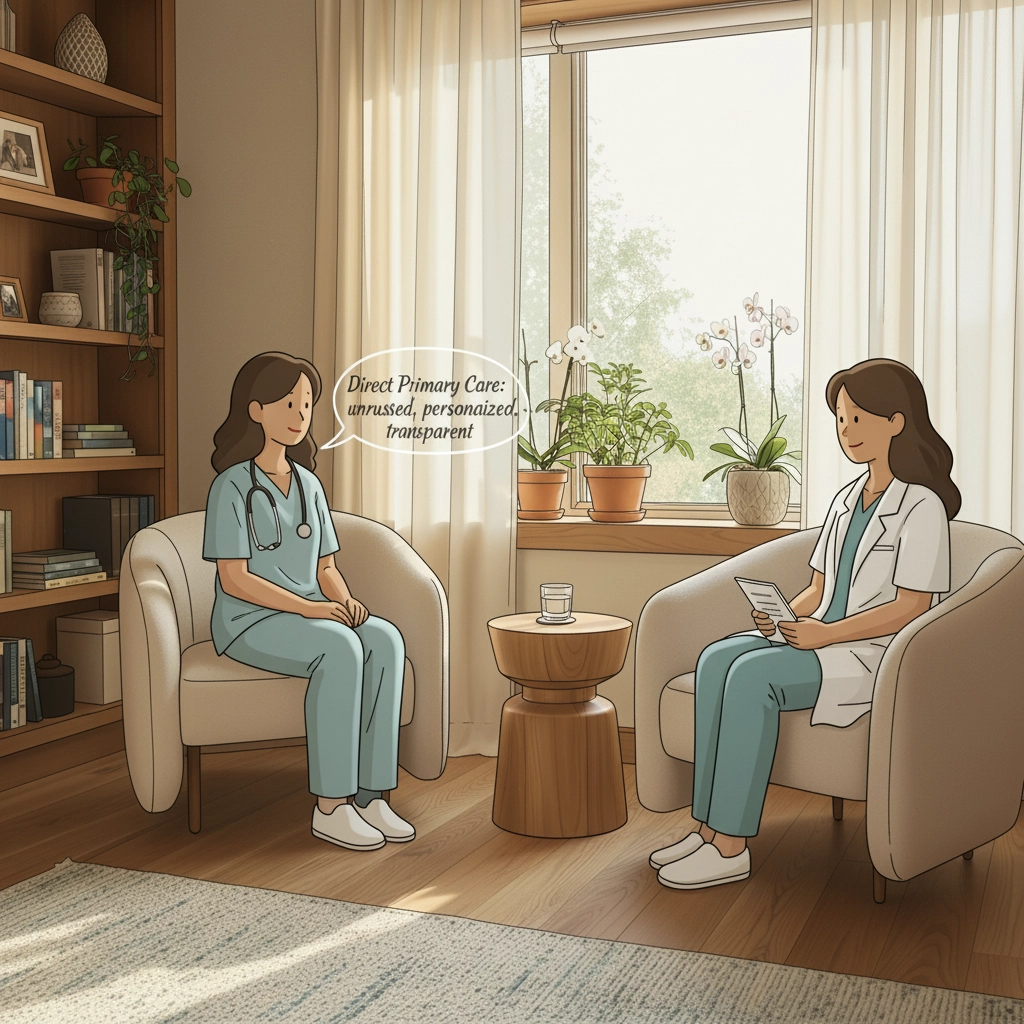
Here's how the numbers compare between traditional healthcare and Direct Primary Care:
Traditional Healthcare:
- Appointment length: 15-20 minutes
- Daily patient load: 20-30 patients
- Annual patient panel: 2,000-3,000+ patients
- Average wait for appointments: 24 days
- Communication: Limited, usually through staff
Direct Primary Care:
- Appointment length: 30-60 minutes
- Daily patient load: 6-10 patients
- Annual patient panel: 400-800 patients
- Wait time for appointments: Same or next day
- Communication: Direct access via phone, email, or text
This structural difference means DPC physicians have something that's become increasingly rare in traditional healthcare: time. Time to listen to your concerns, time to conduct thorough examinations, and time to develop comprehensive treatment plans tailored to your unique needs.
What Longer Appointments Mean for You and Your Family
When your doctor isn't watching the clock, everything about your healthcare experience improves. Research shows that increasing appointment times from just 10 to 15 minutes reduces missed diagnoses by 40%. In DPC settings, where appointments often last 45-60 minutes, the benefits multiply significantly.
Better Diagnoses and Treatment: Extended appointment times allow physicians to hear your complete story, perform detailed examinations, and explore various diagnostic possibilities without rushing. Complex conditions that might take months or years to diagnose in traditional settings can often be identified and addressed in a single comprehensive visit.

Stronger Relationships: Patients with longer appointments report 94% satisfaction rates, compared to just 74% for those with traditional 15-minute visits. This deeper connection translates into measurable health improvements. Medical practices offering extended appointments have seen hospital admissions drop by 35% and emergency room visits decrease by 65%.
True Prevention: With adequate time, your doctor can focus on preventing health problems before they become serious. This includes discussing lifestyle factors, reviewing family history, and creating personalized wellness plans. Prevention is always more effective and less costly than treating advanced conditions.
Peace of Mind: Perhaps most importantly, longer appointments give you confidence that nothing was overlooked. You can ask all your questions, discuss concerns thoroughly, and leave with a clear understanding of your health status and treatment plan.
Your Family Deserves Unhurried Care
At Prairie Rose Family Medicine, we believe healthcare should feel different. We've embraced the Direct Primary Care model because we've seen firsthand how longer appointments transform the healthcare experience. When we're not rushing to the next patient, we can truly listen to your concerns, understand your unique health journey, and partner with you in achieving your wellness goals.

We're here to provide the kind of care you remember from family doctors of the past: unhurried, personal, and focused on what matters most: your health and your family's wellbeing. Whether you're managing a chronic condition, need preventive care, or simply want a healthcare provider who has time to truly know you, Direct Primary Care offers a better way forward.
Your health deserves more than 15 rushed minutes. You deserve a healthcare partner who listens, who has time for your questions, and who sees you as a whole person, not just a diagnosis. We believe everyone should experience healthcare the way it should be: personal, accessible, and centered on your unique needs.
Ready to experience healthcare without the rush? We'd love to meet you and your family. Schedule your complimentary meet and greet today and discover how Direct Primary Care can transform your healthcare experience. Because when it comes to your health, you deserve all the time you need.
